Glendale & surrounding areas
Security Camera Installation Glendale AZ
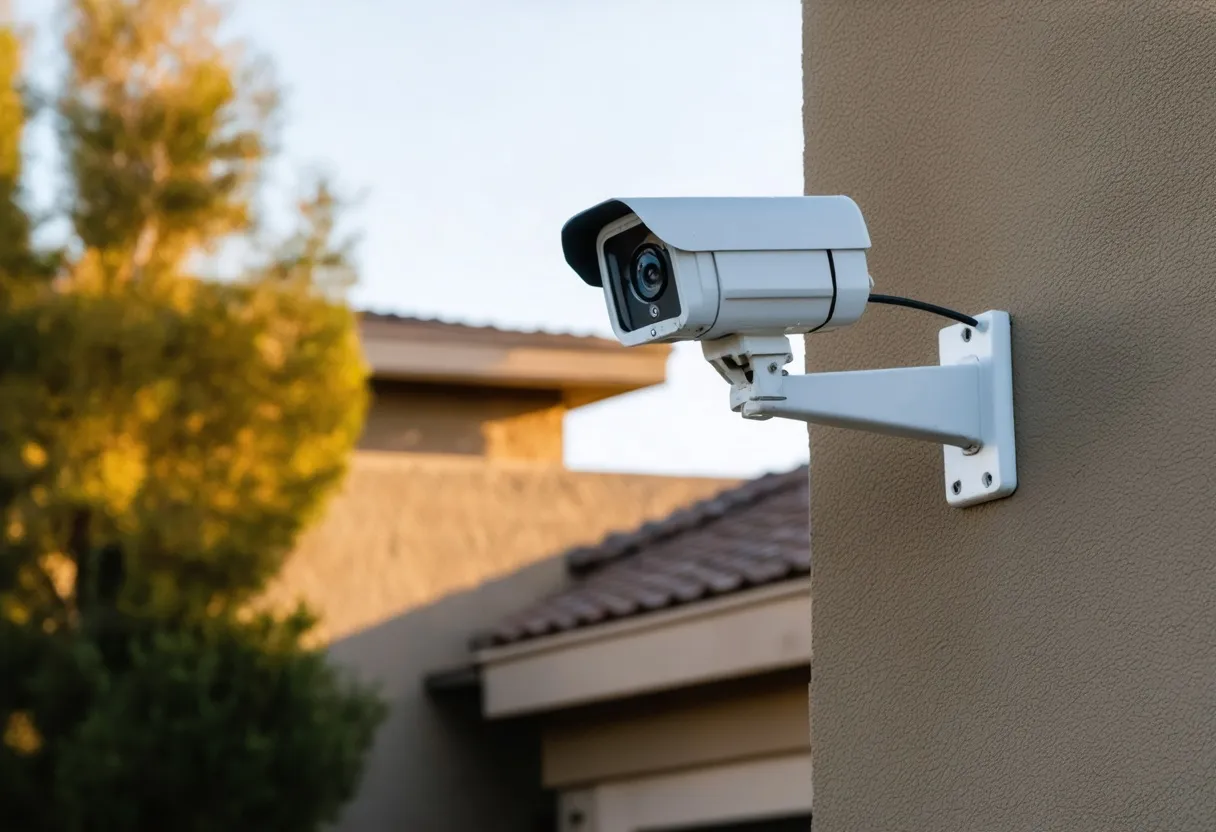
Search "security camera installation Glendale AZ" and you'll find a long list of installers who all say roughly the same thing: fast, professional, affordable. What that list rarely mentions is that Glendale itself works against a cookie-cutter install. Stucco exteriors and tile rooflines change how a camera gets anchored and how far WiFi actually reaches once it hits an exterior wall, and the desert sun angle that pours across west- and south-facing elevations for most of the day turns a poorly aimed lens into a washed-out white rectangle exactly when you need it most. A camera system that ignores both of those realities looks fine on install day and fails quietly over the following year.
We build every Glendale camera and video doorbell installation around Arizona construction and Arizona sun, not a national template. This page walks through what's included, how stucco and tile change the mounting and networking plan, what actually drives your cost, and how our tiered pricing, financing, and lifetime workmanship warranty fit together — the combination we don't see any single Glendale competitor offering as one package.
What's Included in a Glendale Security Camera Installation
Stucco, Tile, and Desert Sun: Why Generic Camera Advice Doesn't Work Here
Most installation guides you'll find online are written for drywall interiors and moderate climates. Glendale is neither, and it changes two things about almost every job we run: how a camera physically gets mounted and wired, and how it needs to be angled once it's up.
Stucco and Tile Change the Mounting Plan
Stucco requires different anchoring than wood siding, vinyl, or interior drywall. Drill it without the right hardware and you risk cracked finish, a water intrusion point, or a camera that works loose within a season of monsoon wind and heat cycling. Tile roof lines also reroute the cleanest wire paths — a straight run that would work on a standard eave often has to detour around tile edges and fascia, which affects both labor time and the final look of the install. Stucco walls also attenuate WiFi signal more aggressively than interior drywall, which matters most on cameras placed away from the router: detached garages, side yards, back fence lines, and pool areas. A camera that tests fine at setup can drop out intermittently once real-world distance and wall material are working against it. We plan mounting hardware, cable routing, and wireless mesh placement around the actual wall and roof assembly of your specific home rather than assuming one approach covers every property.
Desert Sun and Glare Are a Design Problem, Not an Afterthought
Glendale's sun angle is the second variable most installers underestimate, and it's often the one that quietly ruins footage months after install day. A camera aimed even slightly toward west or south exposure can wash into glare for hours during late afternoon — which happens to overlap with when driveway activity and package deliveries peak. Heat is the other half of the problem: sustained summer temperatures shorten the lifespan of plastic camera housings, batteries, and internal components that weren't built for it, and heat shimmer rising off pavement and stucco can trigger a steady stream of false motion alerts that eventually train people to ignore all notifications, including the real ones. We choose housings rated for extended heat exposure and set mounting angles specifically to manage glare through the hottest, brightest hours of the day, then test each camera at the time of day it actually has to perform — not just at setup, when the sun happens to be cooperating.
Video Doorbells Face Their Own Stucco Problem
A doorbell mounted flush on a recessed or angled Glendale entry often ends up facing the wrong direction entirely, which is why many need a wedge mount and the correct stucco anchor rather than a straight, out-of-the-box install. We also verify existing low-voltage chime wiring, size transformers correctly where an upgrade is needed, and test WiFi signal strength at the actual doorbell location — not just at the router — before calling a doorbell installation finished.
Our Installation Process, Start to Finish
We talk through what you're actually trying to solve — package theft, perimeter coverage, a pool or side gate, or folding cameras into an existing smart home setup.
A technician walks the property, checks existing wiring and WiFi coverage at each proposed camera spot, and maps sun exposure and stucco or tile mounting points before anything is quoted.
You get a written good/better/best proposal with clear pricing at each level, so you can see exactly what changes between camera count, resolution, and storage — not a single vague number.
Mounting, wiring or wireless setup, NVR/DVR configuration, and network adjustments are typically completed in one scheduled visit for standard residential systems.
We test each camera at the time of day it matters most for glare and night vision, tune motion zones, then walk every household member through the app before we leave.
One Written Quote, One Warranty, No Surprises Later
Every tier of our proposal — from a starter doorbell-and-two-camera setup to a full perimeter system — comes with the same lifetime workmanship warranty and the same financing options. Nothing gets added after you've already said yes.
Security Camera Installation Questions Glendale Homeowners Ask Most
How much does security camera installation cost in Glendale, AZ?
Cost depends on camera count, resolution, wired versus wireless installation, storage choice, and whether the system needs to integrate with existing smart home or networking equipment. We provide a tiered written quote so you can compare a basic starter package against a full perimeter system before committing, and financing is available on every tier.
Will security cameras work reliably on a stucco home?
Yes, but placement and connection method matter. Stucco attenuates WiFi signal more than interior drywall, so we test signal strength at each proposed camera location and use wired runs, mesh extensions, or dedicated access points where a single router won't reliably cover the whole property.
Can you install a video doorbell without existing doorbell wiring?
Yes. We install wired doorbells using existing low-voltage chime wiring where it's present and compatible, and fully wireless, battery-powered doorbells where no wiring exists or the existing wiring doesn't match the chosen model.
Do outdoor cameras really need special hardware for Arizona heat?
Sustained summer heat shortens the lifespan of housings, batteries, and internal components not rated for it, and can also trigger false motion alerts from heat shimmer off pavement and stucco. We select and position hardware specifically rated for Glendale's climate instead of relying on standard indoor-rated units placed outdoors.
Do you offer discounts for military, first responders, or law enforcement?
Yes, discounts are available for active and retired military, first responders, and law enforcement on camera, video doorbell, and home automation installations. Mention it during your consultation so it's applied before your final quote is finalized.
Can cameras be integrated with an existing smart home or home theater system?
In most cases, yes. We regularly integrate cameras and doorbells with existing voice assistants, smart locks, and lighting automation, and can also build them into a new whole-home automation or home theater project from the start.
Service Area, Cost Factors, and Vetting a Glendale Installer
Our core coverage area is Glendale's 85301, 85302, 85303, and 85305 zip codes, and we also install camera, video doorbell, and smart home systems for homeowners and businesses in Peoria, Mesa, and Scottsdale. Working across that stretch of the Valley means we see the same stucco-and-tile construction pattern and the same sun-angle glare problem repeat from one job to the next, which is why our approach stays consistent and tested rather than improvised property by property.
What Actually Moves the Price
Camera count and coverage area is the biggest driver — a single doorbell setup costs a fraction of a full perimeter system covering front, back, side yards, and a detached garage. Resolution and low-light performance matter too: higher-resolution cameras with real night vision and heat-tolerant sensors cost more but produce footage useful for identification rather than just motion confirmation. Wired versus wireless is another factor — running conduit through stucco and around a tile roofline takes more labor than a wireless mesh setup, but avoids the WiFi dropout issues stucco can cause on far-flung camera locations. Storage choice, smart home integration depth, and the condition of your existing home network all factor into the final tiered quote as well.
How to Vet Any Installer You're Comparing Us Against
Ask specifically how they handle stucco and tile mounting, whether they test camera placement against actual sun exposure or just power the unit on and call it done, what warranty covers the workmanship itself rather than just the manufacturer's hardware warranty, and whether financing comes without deferred-interest traps. A written, tiered quote — rather than one flat number scribbled after a five-minute walk-around — is a strong sign the installer is actually planning the job rather than pricing it on the fly. The same questions apply whether you're comparing us to another Glendale installer or a big-box DIY kit: placement discipline, honest pricing structure, and warranty coverage are what determine whether a system still works flawlessly in a few years, not just on install day.
Get Your Free Quote
No obligation, no pressure — just a clear look at your options.
Ready to Plan Your Setup?
Get a clear, tiered quote built around your room and Glendale's climate.